The journey began at the China International Small and Medium Enterprises Fair (CISMEF) last September 2026, where SIPPO supported the Ministry of Micro, Small and Medium Enterprises (MoMSME) in guiding selected Indonesian SMEs to conduct marketing and promotion activities more strategically. Due to the collaboration, Indonesian SMEs gained exposure to one of the world's largest markets and established valuable connections with potential buyers in China. The Indonesian Trade Promotion Center (ITPC) in China also played a critical role in identifying and connecting promising prospective buyers. Among them was Mr Liao, who expressed strong interest in Indonesian coffee, particularly Luwak Coffee, for his growing chain of coffee shops. The buying mission that followed was therefore a strategic continuation of relationships initiated much earlier.
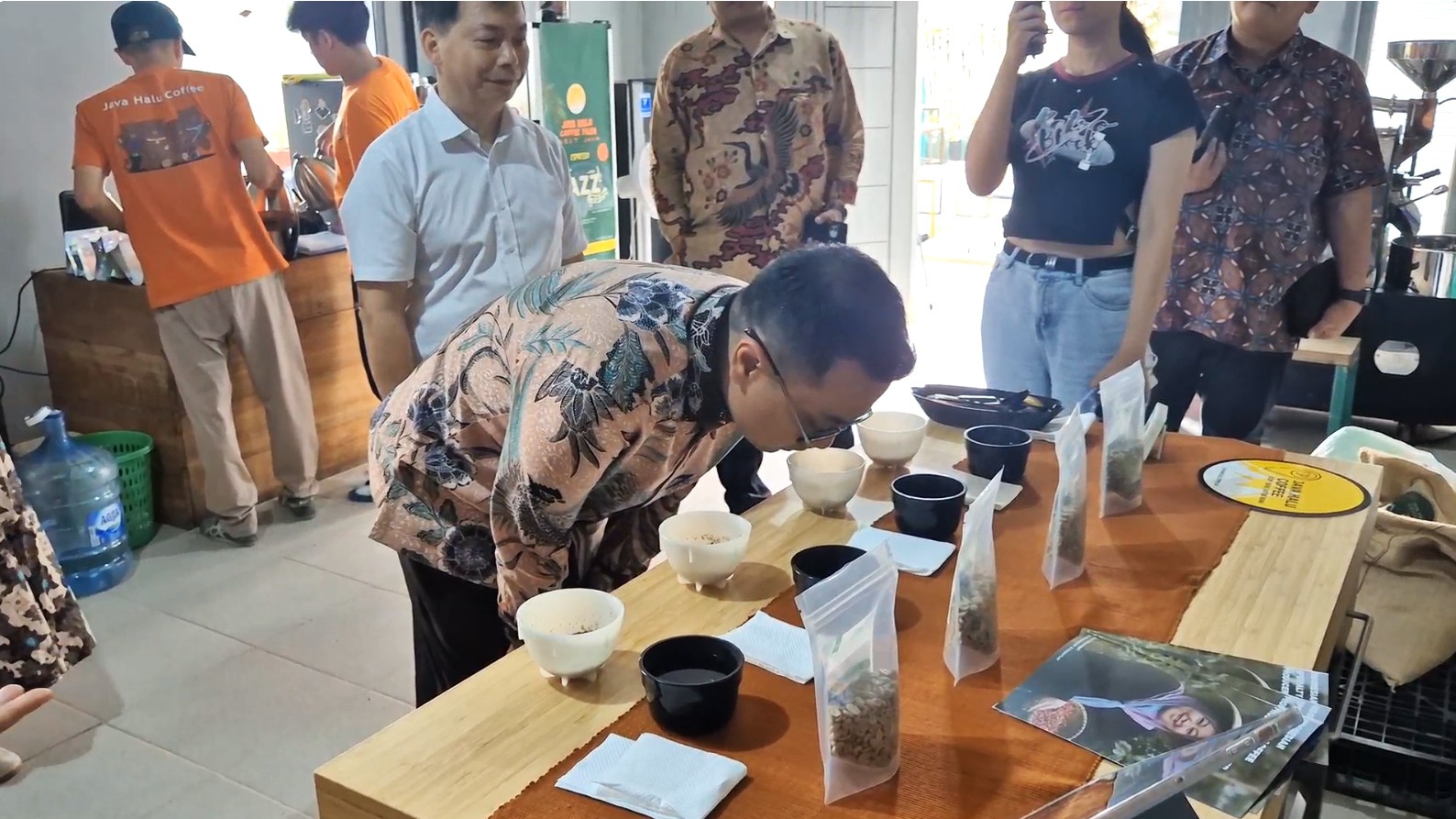
One of the enterprises receiving the delegation was Java Halu Coffee, led by the owner, Rani Mayasari. Like many other SMEs, Rani faced a challenge when competing against larger players with greater production capacity. According to Rani, commercial coffee buyers often expect minimum deliveries of ten tonnes or more. As a smaller enterprise, competing on volume alone can be impossible. She then chose to grow by being different. Java Halu Coffee focuses on specialty coffee, a segment demanding meticulous processing and rigorous quality control to drive innovation. Among its flagship products is Luwak Enzymatic coffee. It offers the distinctive profile associated with Luwak coffee without animal exploitation.
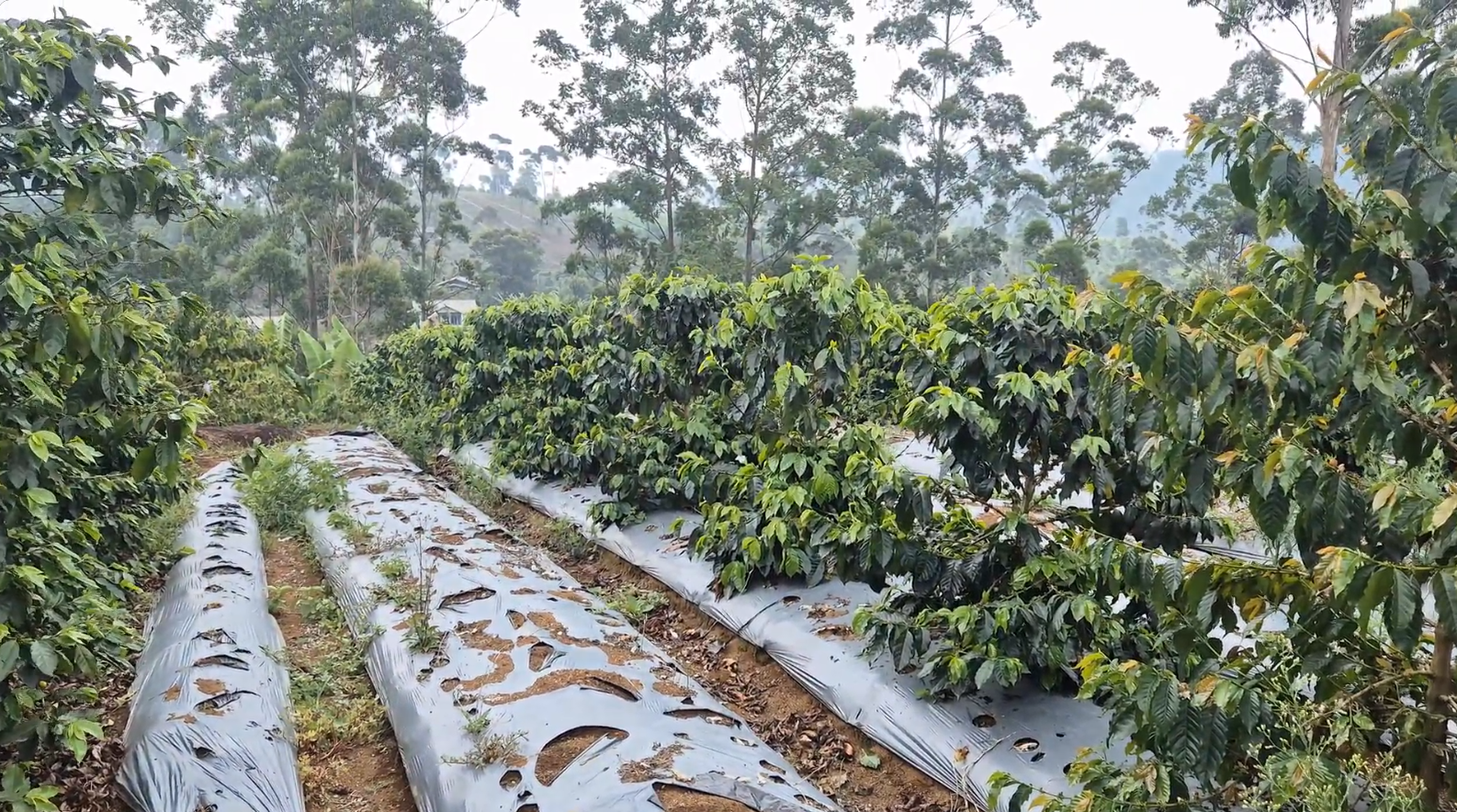
Nonetheless, her most remarkable innovation may have little to do with coffee. It is how she views her community and the vision of women's empowerment. Rani worked mostly with female farmers to demonstrate how better cultivation practices in their own gardens, nestled in the high hills of Bandung, could dramatically increase productivity. While conventional approaches yielded around one tonne of coffee cherries per hectare, her methods produced nearly three times as much, with an impact that extended beyond the farm. Women gained stronger economic roles within their households, family incomes increased, school fees were paid on time, and confidence grew alongside coffee trees. In her words, “Buyers' trust was often easier than earning the community’s trust. Convincing farmers to embrace new ways of working required patience, persistence, and proof.”
At Java Halu Coffee, sustainability begins where most businesses see the end. Nothing goes to waste. Coffee husks are transformed into briquettes and fire starters, reducing the community's reliance on firewood for daily cooking. The remaining waste is converted into biochar fertilizer, mixed with chicken manure and carefully fermented before returning to the fields that produced the coffee. Rani’s simple philosophy, “What comes from the soil should eventually return to it.” This is a closed-loop economy where waste becomes fuel, fuel creates livelihoods, and yesterday's harvest helps grow tomorrow's.
To answer questions around safety, Java Halu Coffee sends its coffee annually to SGS laboratories in Vietnam, independently verifying that its beans are free from 46 types of chemical residues. Being in the Top 5 of the Southeast Asia Green Coffee Competition 2025, proof has become part of her product, and her coffee has earned regional recognition. But what interests Mr Liao goes beyond the award, as he explained, “What connects us is the story. Whether it is organic practices, environmental responsibility, women's empowerment, or freedom from animal exploitation.” A statement that proves how global buyers are increasingly looking beyond products for stories their customers can believe in.
If Java Halu Coffee represents the power of community transformation, the second enterprise visited represents the power of innovation. PT Teknologi Solusi Jaya Abadi (TSJA), led by Natanael Charis, approaches coffee from a different angle. Having won 2nd runner-up as Best Brewer at the Roasters’ Choice Award 2014, his mission is to reinvent what coffee can become. NATCHA, the coffee innovation brand, is the result of experiments in advanced processing methods and controlled fermentation techniques that result in highly differentiated flavour profiles.
A coffee that challenges expectations, some varieties exhibit intense fruity notes reminiscent of wine. This is achieved through sophisticated carbonic maceration and anaerobic fermentation processes where neither wine is added nor alcohol is present, but one can expect a completely transformed sensory experience.
Behind his every lot is extensive process control, traceability, documentation, and quality management. This interests regional prospective buyers like Mr Liao. In a crowded market, innovation creates distinction, but buyers also want assurance that unique products can be produced consistently and reliably.
SIPPO Indonesia consistently supports the MoMSME and ITPC in China to increase their capacity to conduct a robust marketing and promotion strategy. This includes training on company diagnostic tools development to assess SME export readiness, effective product presentation, and market intelligence to ensure the right prospective market and buyers are connected. All this, and a strong export promotion ecosystem, will support SMEs to stay competitive in the market.
Hence, by the time Mr Liao arrived in Bandung, much of the groundwork had already been completed. Connections had been made, and interest had been established. The buying mission served to reduce uncertainty and answer through tangible proof:
· Can the supplier consistently deliver?
· Is the production process as strong as described?
· Does the story match reality?
· Can trust move beyond emails and presentations?
These are questions that require seeing, listening, walking through plantations, and directly talking to producers. In essence, experiencing the product at its source. This is what SIPPO, together with the MoMSMEs and the ITPC in China, helped make possible: building the ecosystem of relationships that made the visit worthwhile. Because nobody flies 4,000 kilometres for coffee, they fly for confidence. And behind every Buying Mission, every export opportunity, and every future partnership, there is usually far more happening than meets the eye.
Swiss Import Promotion Programme (SIPPO) is mandated by the Swiss State Secretariat for Economic Affairs (SECO) and is implemented by Swisscontact Indonesia.