The Best Internship Is the One Guests Never Notice

Initial vocational education and training, Sustainable tourism
Garniasih Garnijanto10.07.2026
A student may spend years preparing for a career in hospitality yet still enter the workforce without fully understanding industry expectations, leading to the question, "What does successful talent development look like?"

The strongest talent pipelines are invisible.

Guests do not see differences in the services provided by trainees or employees.

They simply experience service excellence.

Christian Wildhaber, General Manager of Mandarin Oriental Jakarta, believes this is the benchmark for success in skills. Yet beyond technical skills, this level of excellence is also built through responsibility, attitude, and real workplace experience.

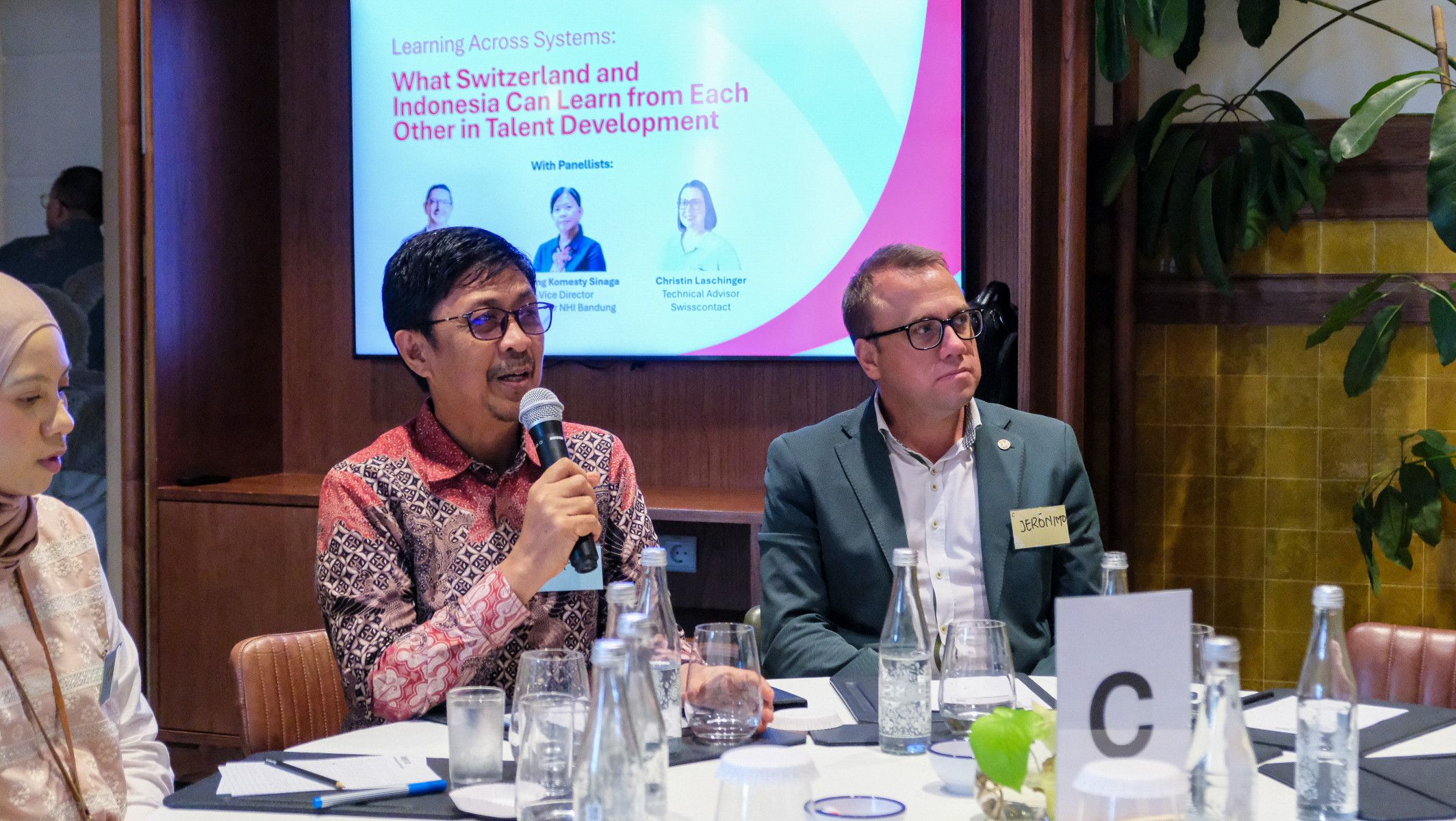
Left to Right: Christian Wildhaber (General Manager of Mandarin Oriental Jakarta), Christin Laschinger (Technical Advisor for Sustainable Tourism Education Development, Swisscontact), Endang Komesty Sinaga (Vice Director of Academic and Quality Assurance for Poltekpar NHI Bandung), and Sarah Suhartono (Executive Director for SwissCham).

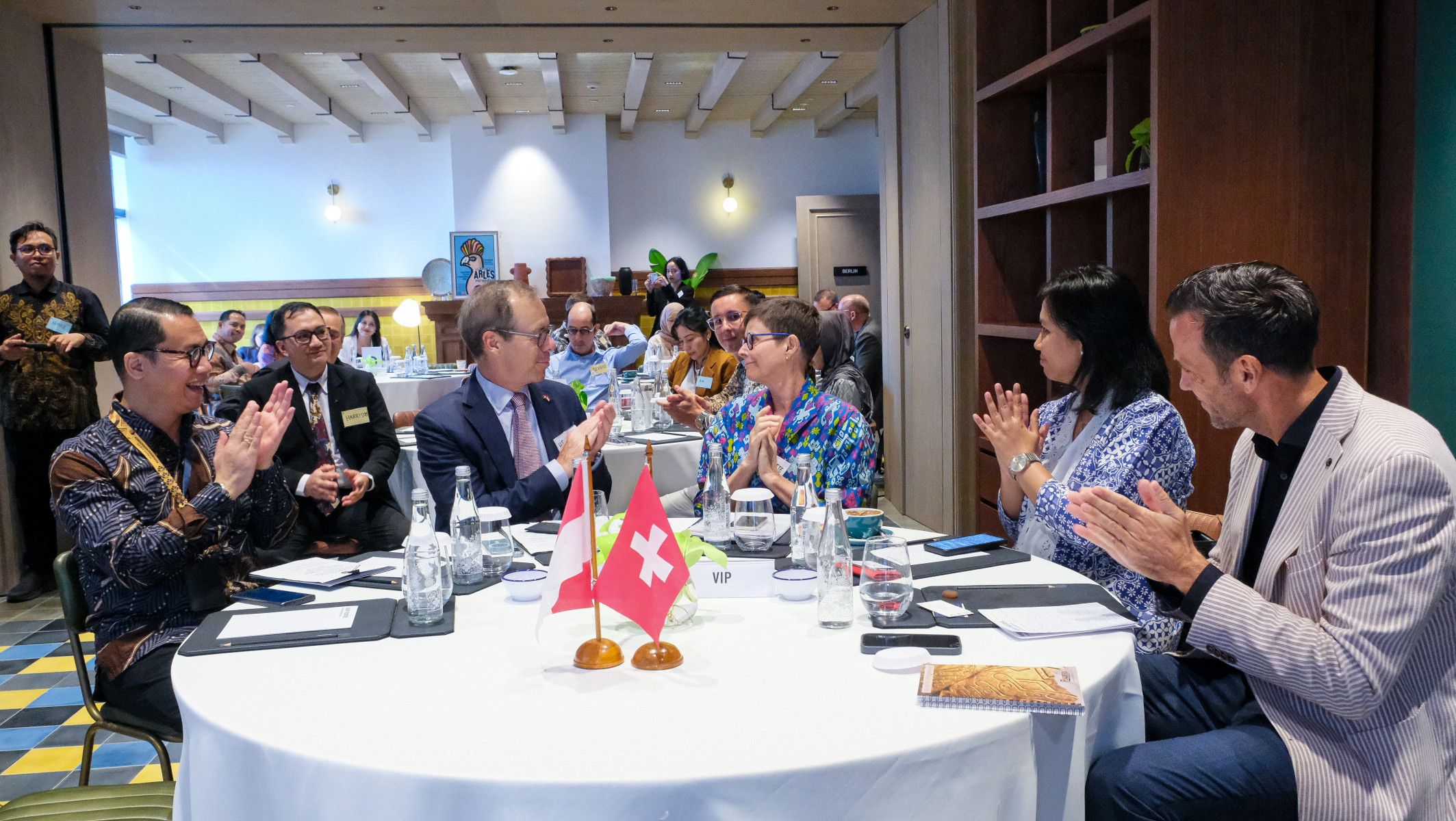
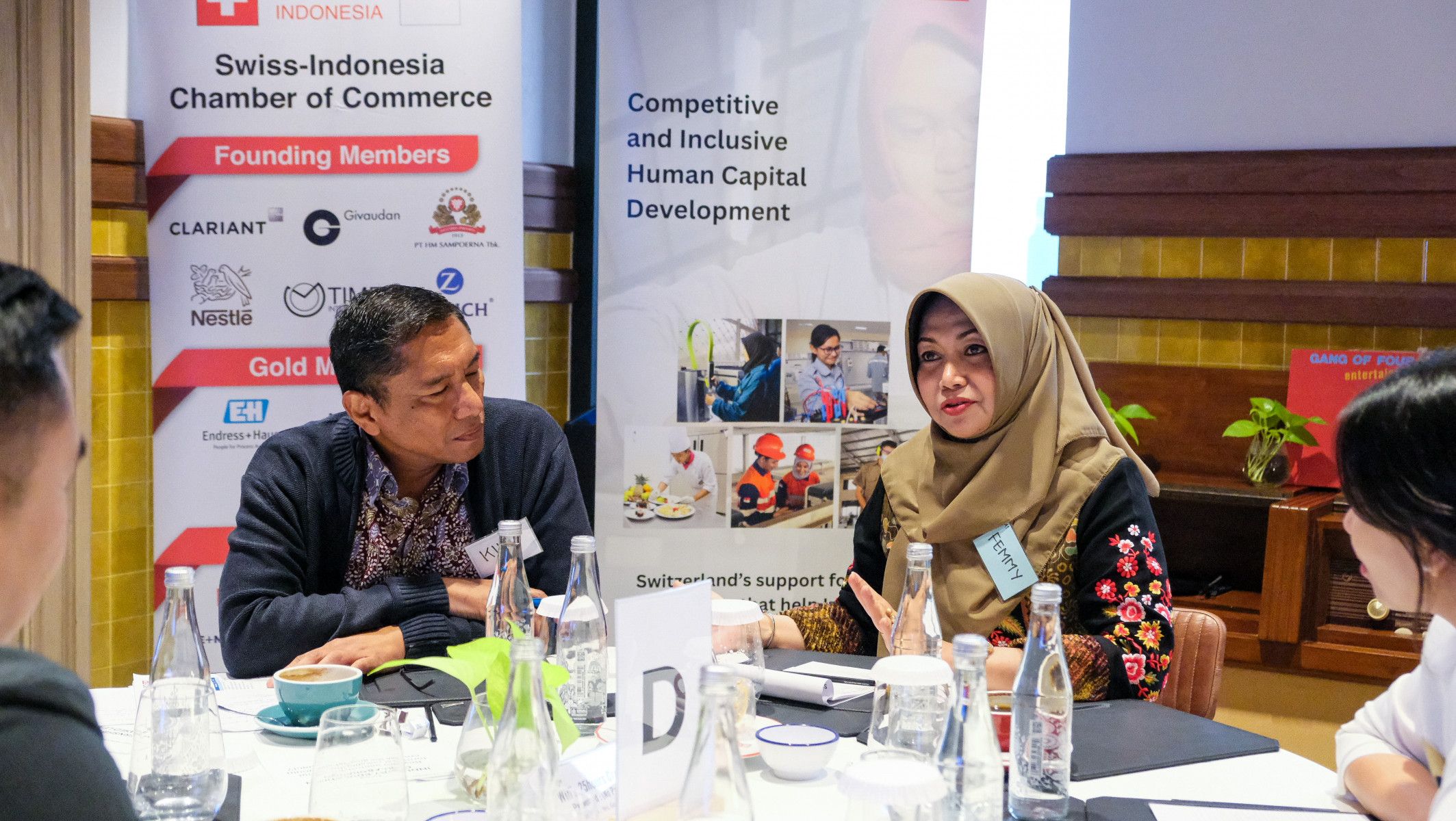
Marking 75 years of Swiss-Indonesia bilateral relations in 2026, the Embassy of Switzerland in Indonesia hosted a high-level networking and sharing session in collaboration with Swisscontact and SwissCham Indonesia. Alongside tourism leaders, representatives from the Ministry of Tourism, and six polytechnics, we united around a shared belief that stronger collaboration creates stronger talent.

"Providing young people access to qualified jobs is a collective responsibility. One that begins long before recruitment, for learning experiences to reflect the realities of today's tourism sector."
H.E. Olivier Zehnder, the Ambassador of Switzerland to Indonesia, Timor Leste and ASEAN.

The discussion made one message impossible to ignore. Talent development works best when education and industry stop operating in separate worlds.

Funded by the Swiss State Secretariat for Economic Affairs (SECO) and implemented by Swisscontact, the Sustainable Tourism Education Development (STED) under SS4C is based on the premise that:

(1) when industry helps shape curricula,

(2) when supervisors are trained to mentor learners in the workplace, and

(3) when businesses invest in future employees before they are hired, skills become more relevant to the jobs that await them.

Real opportunity lies in understanding why successful blueprints in Switzerland work, and adapting them to local realities. Initiatives like In-Company Trainer training and Structured Internships, help industry, education, and the government move from parallel tracks to a shared journey. One built on co-development with the purpose of a lasting impact beyond a program's presence.

Thus, moving forward, what will future possible collaborations look like?

The strongest ideas that emerged during the speed networking session pointed to a shift in mindset to turn an internship into a career, not just a placement:

  • A system that stays connected from classroom to workplace by facilitating internships at the end of a student's program, ensuring bonds built on the job carry straight into employment.
  • Government policies and support to help students pursue internships beyond their hometowns.
  • Industry scholarships that spark healthy competition among students.
  • Turning academic research into better guest experiences.

When every stakeholder invests in the journey, the path from learning to employment becomes far more than a handover. It becomes a pipeline.
2018 - 2022
Indonesia
Initial vocational education and training, Sustainable tourism
Sustainable Tourism Education Development Project
Tourism is an important part of the Indonesian economy and an important source for generating employment and foreign exchange reserves. Swisscontact has been actively supporting the Indonesian MTCE (Ministry of Tourism and Creative Economy) since 2009 to strengthen the competitiveness of selected tourism destinations.
2024 - 2027
Indonesia
Initial vocational education and training, Reskilling and upskilling
Swiss Skills for Competitiveness (SS4C)
SS4C is to strengthen the incentives and capacities of public and private dual vocational education and training (dVET) providers at the micro- and meso-level so that the skills of graduates match the needs of industry, thereby improving small and medium enterprises’ (SMEs) productivity and contributing to more competitive SMEs in Indonesia competing on the global market.