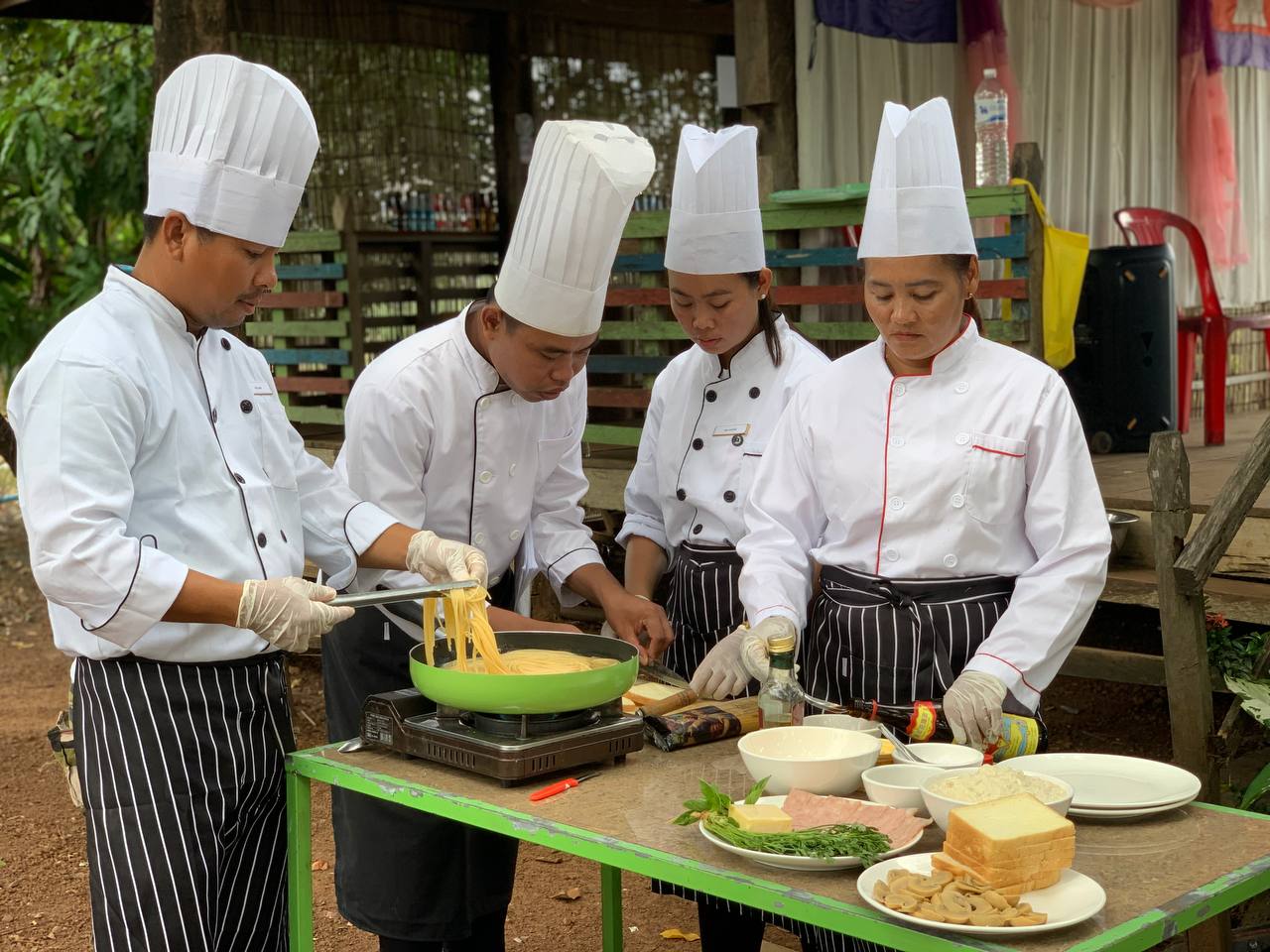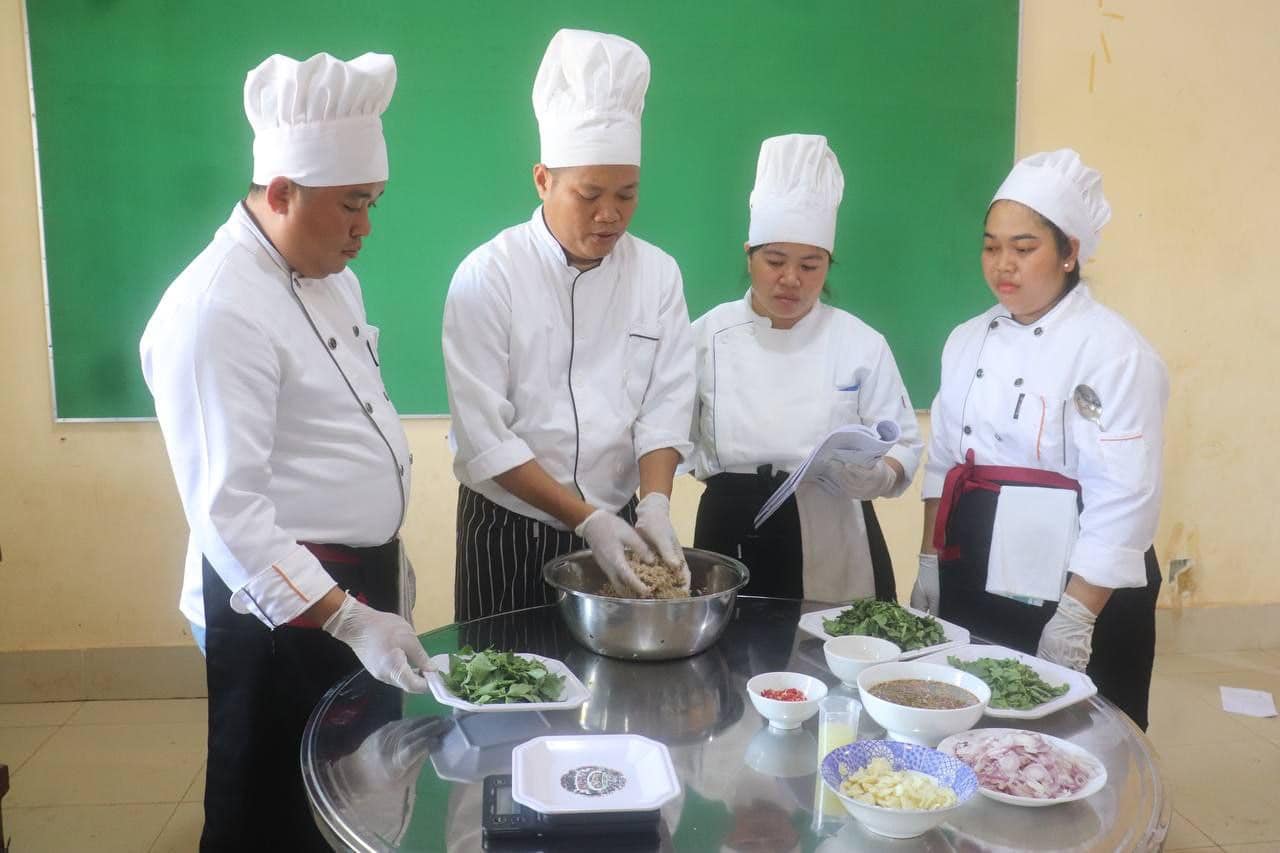
The programme focused on strengthening both culinary techniques and training abilities, enabling trainers to transfer their knowledge to low-skilled workers in the provinces. By doing so, they will help raise service quality, offering memorable dining experiences for both domestic and international tourists. The participants represent the private sector and Provincial Departments of Tourism (PDoTs), ensuring that the impact of this initiative reaches across different levels of the hospitality ecosystem. This achievement was made possible through a strategic collaboration between the Hospitality Kampuchea (HoKa) Steering Committee of the Ministry of Tourism (MoT), the PDoTs, and the Skills Development Programme (SDP).
Highlights of the Training Programme
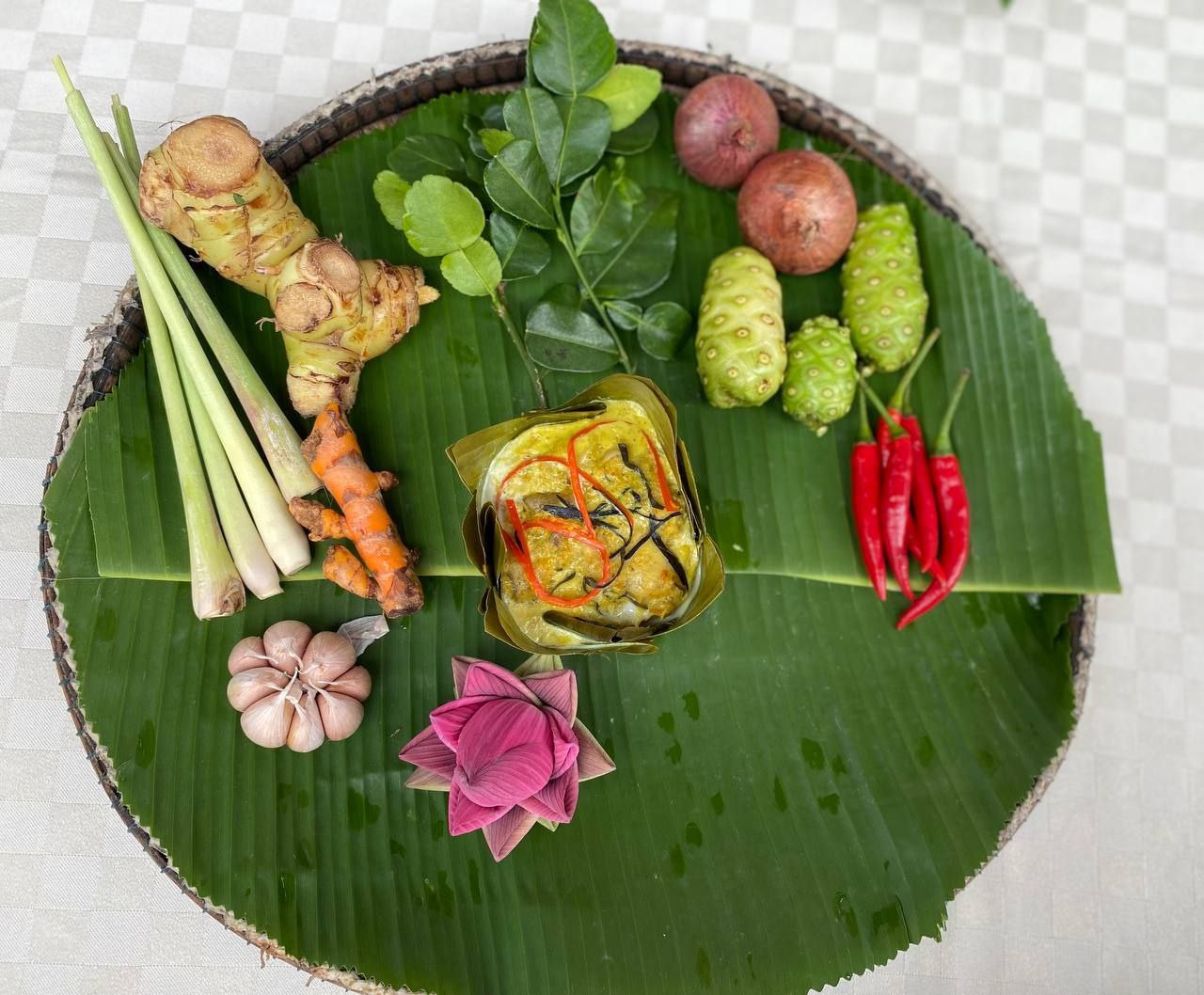
The training programme focused on enhancing technical expertise in traditional and local cuisine and equipping trainers with essential additional skills. Throughout the session, participants developed stronger teaching methodologies to effectively transfer knowledge, improved their digital literacy to support recipe research and innovation, and sharpened their soft skills for better communication and learner engagement. Moreover, the programme introduced green kitchen practices such as energy-efficient cooking, water-saving techniques, food waste reduction, and eco-friendly cleaning methods.
The Benefits for Businesses and Communities
To continue growing the hospitality sector in Cambodia, it requires individuals with the necessary skills to provide safe, high-quality food. When tourists enjoy a good dining experience, they tend to stay longer, spend more, and recommend Cambodia to others.
Below are the practical impacts resulting from the training completed:
Voices from the field
Small actions can lead to big changes.
To strengthen Cambodia’s hospitality and tourism human capital, the MoT, PDoT, and SDP will continue to support trainers through mentoring, coaching, technical support, and specialised programmes such as the Hospitality Industry Training for Trainers (HITT) and the Professional Industry Placement (PIP). These initiatives aim to develop and maintain a robust pool of qualified trainers capable of delivering consistent, high-quality training in every province.
About HoKa
As a leading industry-based training model, the Hospitality Kampuchea (HoKa) programme offers high-value hospitality training tailored to low-skilled workers, supervisors, managers, and business owners in the hospitality sector. The programme supports upskilling and reskilling needs for a diverse range of establishments, including hotels, guesthouses, resorts, restaurants, coffee shops, and eco-tourism communities. Participants benefit recognised certificates that enhance their job opportunities and contribute to the growth and quality of their businesses.
HoKa’s comprehensive courses include theoretical knowledge, technical skills, soft skills, methodology, and hospitality management. Participants can train in key areas such as Front Office, Housekeeping, Cooking, Food & Beverage Service, Barista, and Community Tour Guide.
Implemented across twelve target provinces, HoKa operates through a partnership between the Ministry of Tourism and the Skills Development Programme, a project of the Swiss Agency for Development and Cooperation (SDC) and co-funded by the Liechtenstein Development Service (LED).