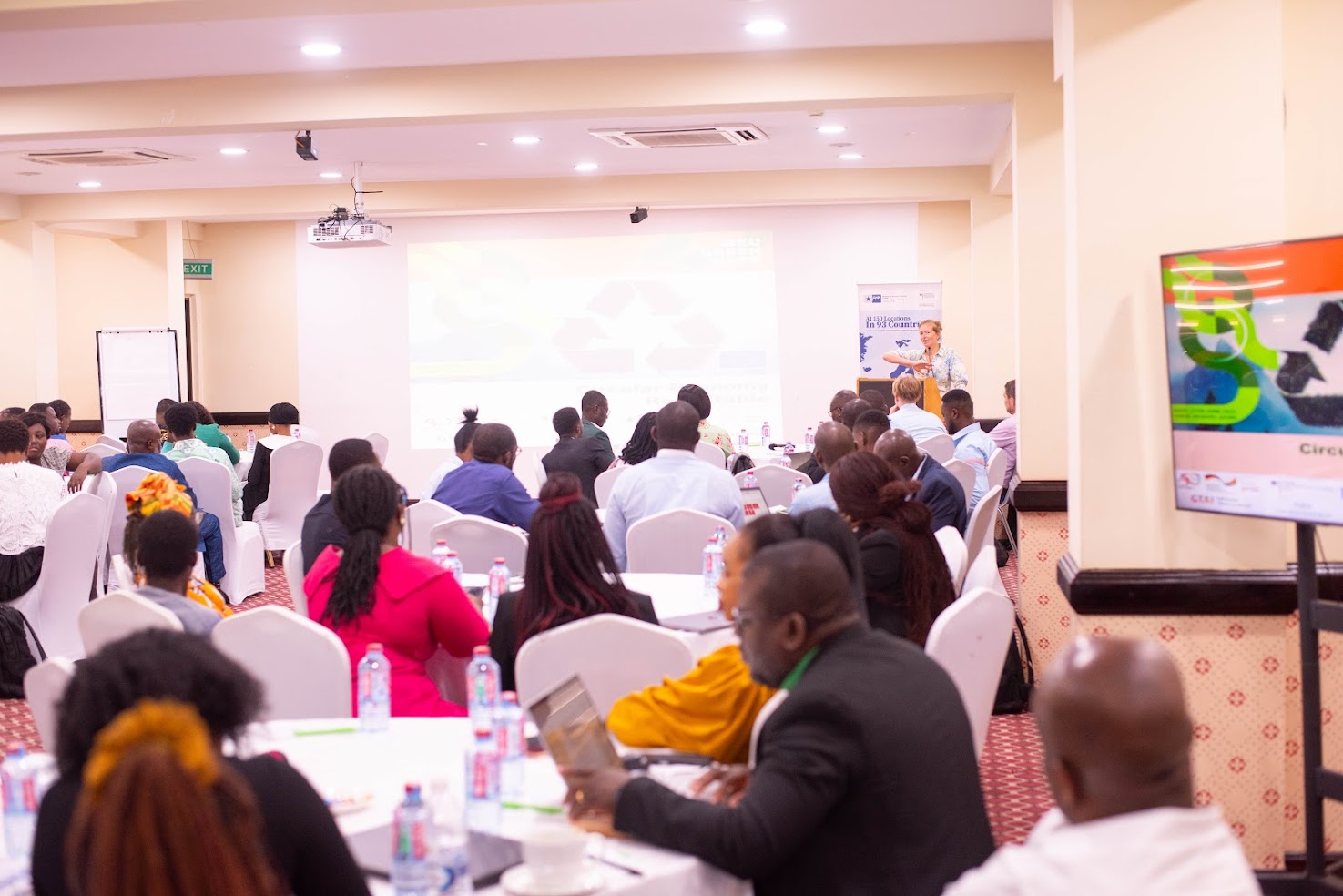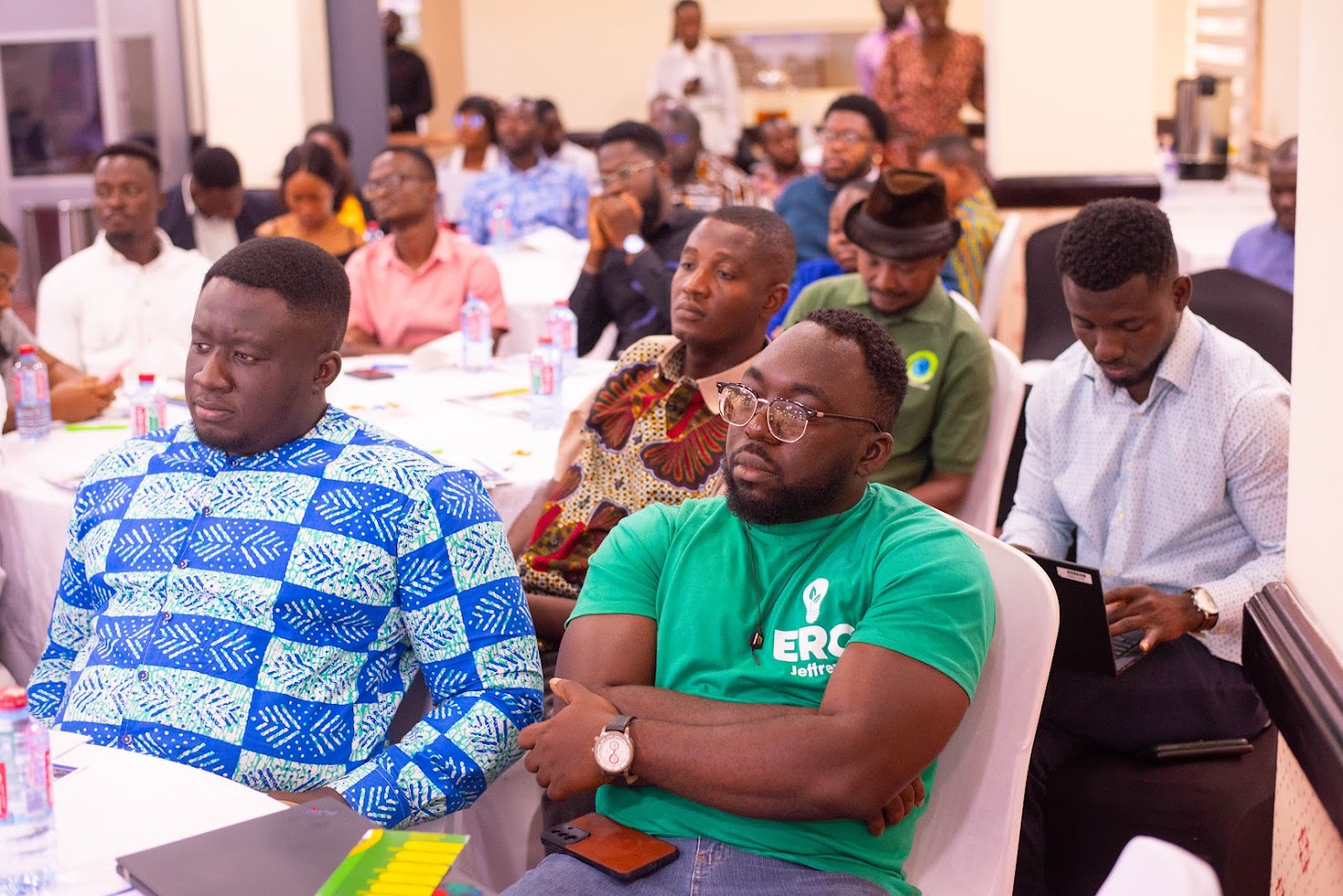
Swisscontact Ghana’s team, represented by Araba Ampomah, Efua Aidoo, and Nana Yaw Konadu from Electro Recycling Ghana (ERG), delivered a presentation titled “Tackling E-Waste through Strategic Partnerships,” spotlighting the critical need for collaborative action in addressing Ghana’s growing e-waste challenge.
Ghana generates over 500,000 tonnes of electronic waste annually, with nearly 40% processed informally in areas like Agbogbloshie, Techiman, and Kumasi. Here, over 200,000 people depend on e-waste for survival, often using unsafe dismantling and burning methods that expose workers and communities to toxic chemicals while polluting land and water bodies.
This crisis is driven by the influx of untested second-hand electronics from Europe and low-quality, short-lived electronics from Asia, resulting in a continuous cycle of waste accumulation, health hazards, and environmental degradation.
The presentation highlighted key challenges including:
Yet, beneath these challenges lie significant opportunities:
To transform the e-waste management system, Swisscontact Ghana and ERG have partnered under the SesaTec initiative, piloting 30 container-based collection and processing models with a vision to scale to 2,000 hubs nationwide. This model:
“For us at Swisscontact, a circular economy is not just about managing waste; it’s about creating decent jobs, promoting local innovation, and ensuring that environmental sustainability goes hand-in-hand with economic opportunities.” Araba Ampomah, MRM lead and Project Officer, Swisscontact Ghana.
“It’s inspiring to see how young people in these communities, when given the right tools, are turning what was once waste into a source of livelihood while protecting the environment,” added Efua Aidoo, Partnerships and Project Officer, Swisscontact Ghana.
During the event, Nana Yaw Konadu from ERG joined a panel discussion on “Innovative Financing & Circular Business Models – Scaling Solutions in Ghana.” He highlighted how the SesaTec model is not just a recycling initiative but a proof-of-concept for scalable, financially viable circular business models that attract investment while delivering environmental and social impact.
By integrating responsible collection, technology, and partnerships, Nana explained how SesaTec demonstrates the potential for innovative financing to accelerate Ghana’s circular economy while addressing critical waste management challenges.
Through partnerships like Swisscontact Ghana and ERG, circular economy solutions in e-waste management are transforming scrap into empowerment, driving Ghana closer to a greener, more resilient future.