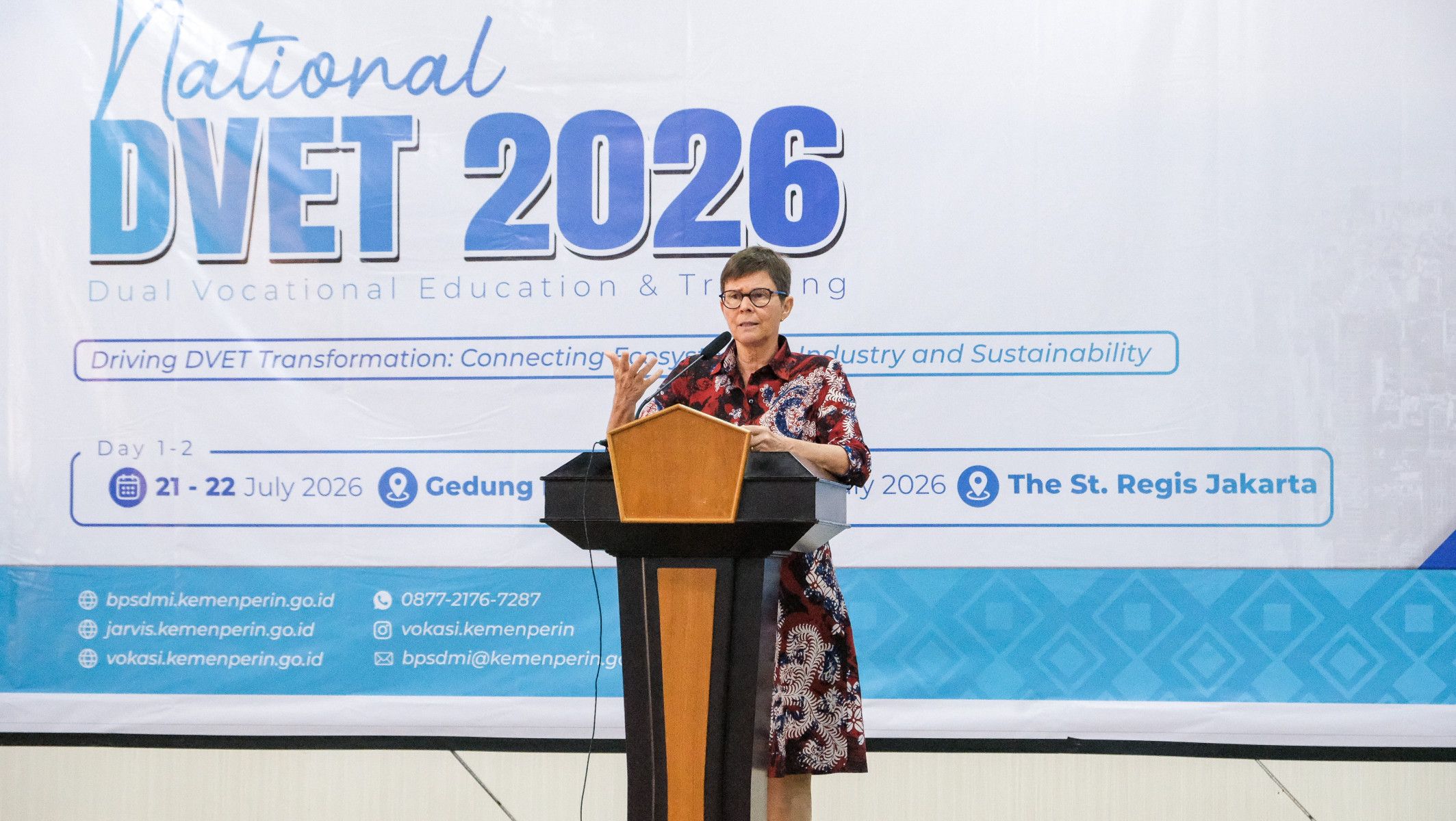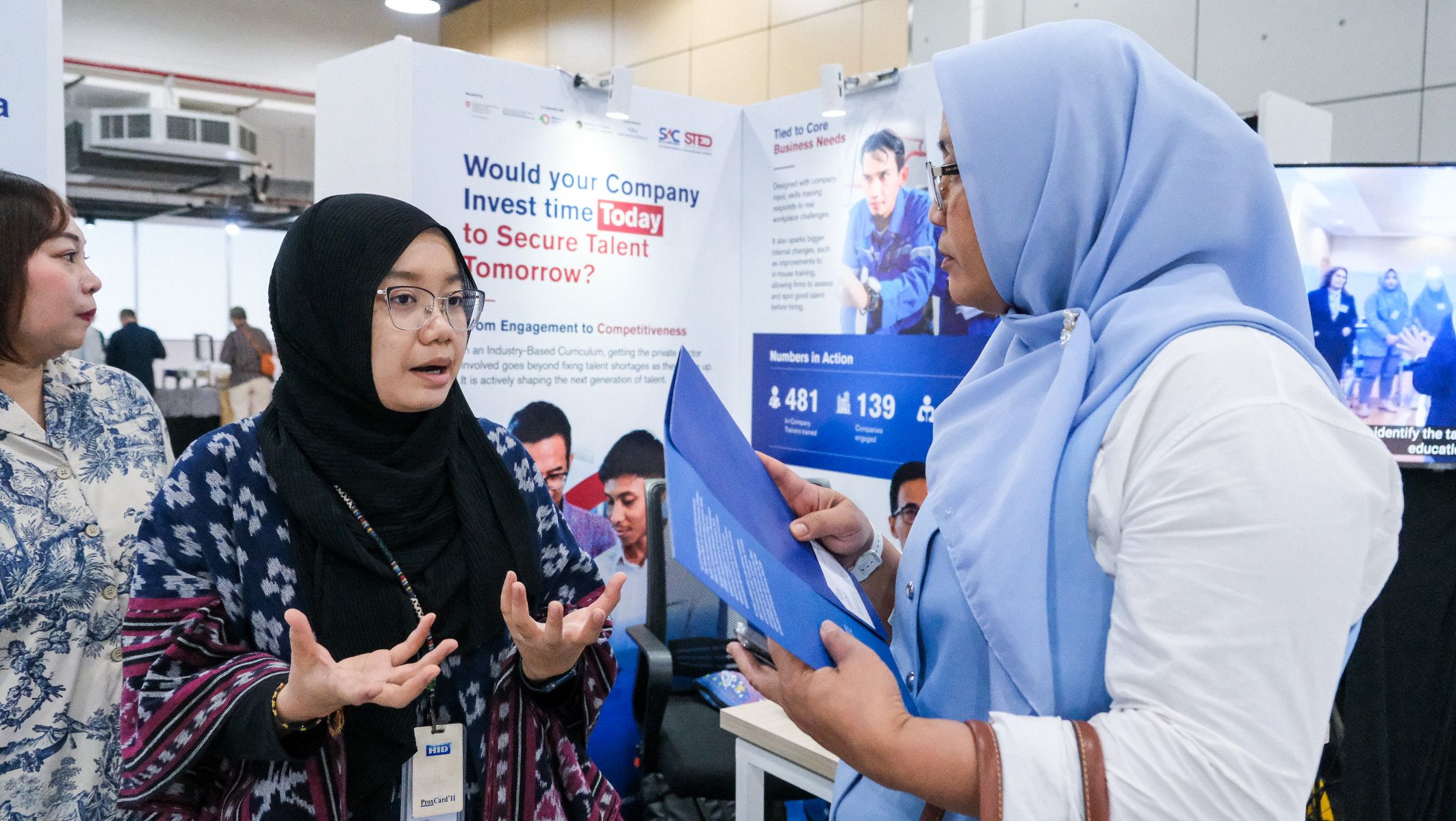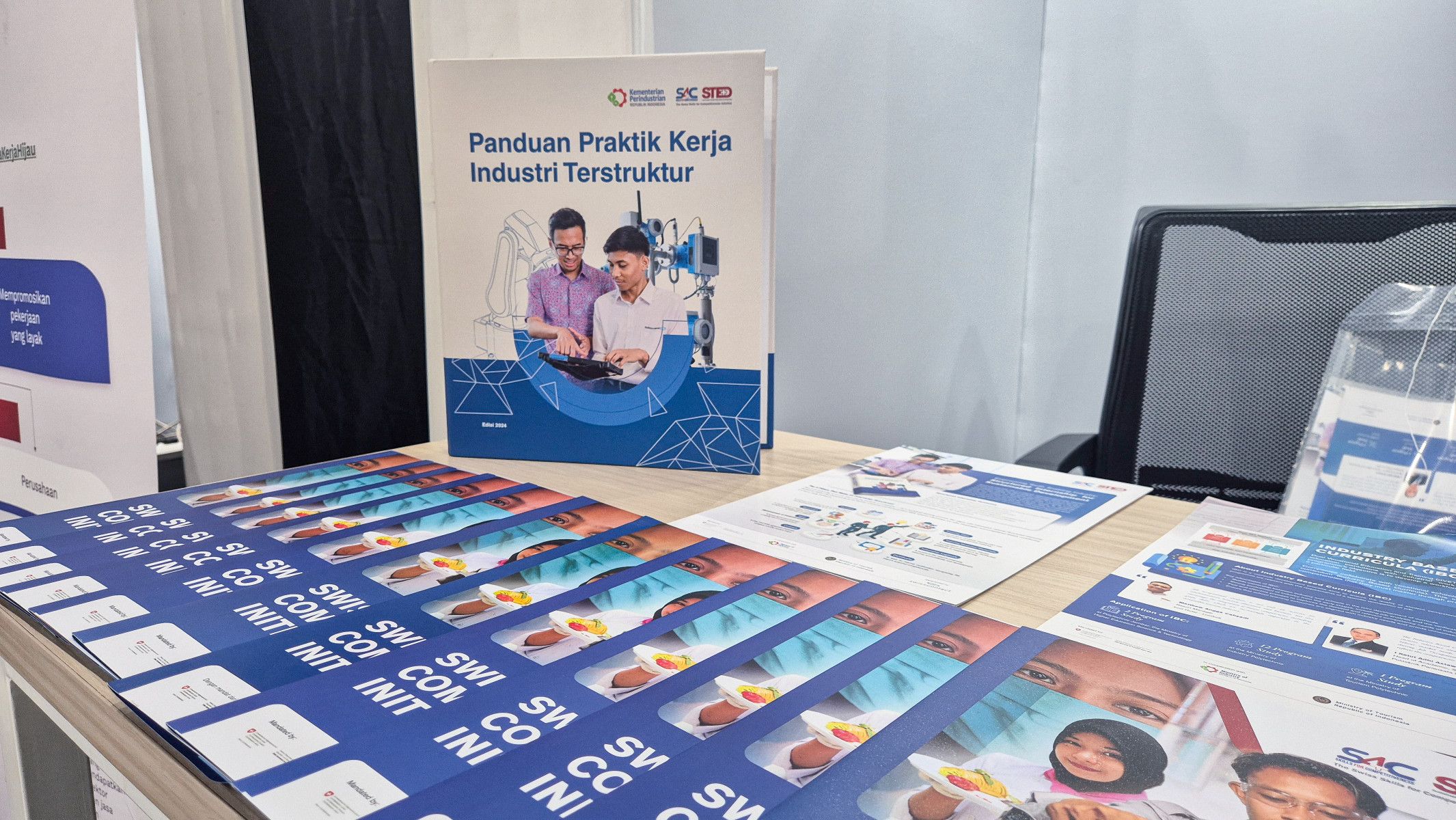
Just a few steps away, an array of displayed chocolates and cleaning products were made by students beyond classroom simulations to meet quality standards for real clients. Produced through SMK-SMTI Makassar’s teaching factory (TEFA), the products demonstrated students’ skills in production and quality control. These were not isolated success stories. They were a glimpse of what happened during the 3-day DVET National Event 2026, held by BPSDMI under the Ministry of Industry. Stakeholders gathered to showcase and discuss vocational transformational efforts that have been strengthened through the Swiss Skills for Competitiveness (SS4C) programme, implemented by Swisscontact Indonesia alongside government and industry partners. A revelation of how vocational education learns by stepping outside the classrooms, and a stark reminder that if Indonesia wants a future-ready workforce, education cannot move alone.
In a rapidly changing world, adaptability has become a necessity. The same spirit is reflected in this SECO-funded program, as echoed by Violette Ruppanner, Head of Swiss Economic Cooperation and Development at the State Secretariat for Economic Affairs (SECO), “Marking 75 years of diplomatic relations between Switzerland and Indonesia has shown that success comes from developing solutions together. Solutions that respond to local needs, owned by national partners, and continue to grow long after a programme ends.”
One of the most discussed aspects of the Industry-Based Curriculum (IBC) throughout the event was flipping the script on vocational curriculum design. Traditionally, teachers break down competencies and create learning content before seeking industry validation. IBC reverses the process. Industry speaks first. Experts and practitioners identify actual duties, tasks, tools, and competencies required in the workplace. Educational institutions then translate them into learning outcomes and teaching materials. A different starting point, with significantly different outcomes. Driven by digitalization, the recently built IBC digital platform ensures curriculum alignment remains efficient. Parts of the process achieved approximately 60% cost savings compared to traditional manual methods. More importantly, digitalization creates consistency and traceability, two critical elements for scaling quality implementation across Indonesia.
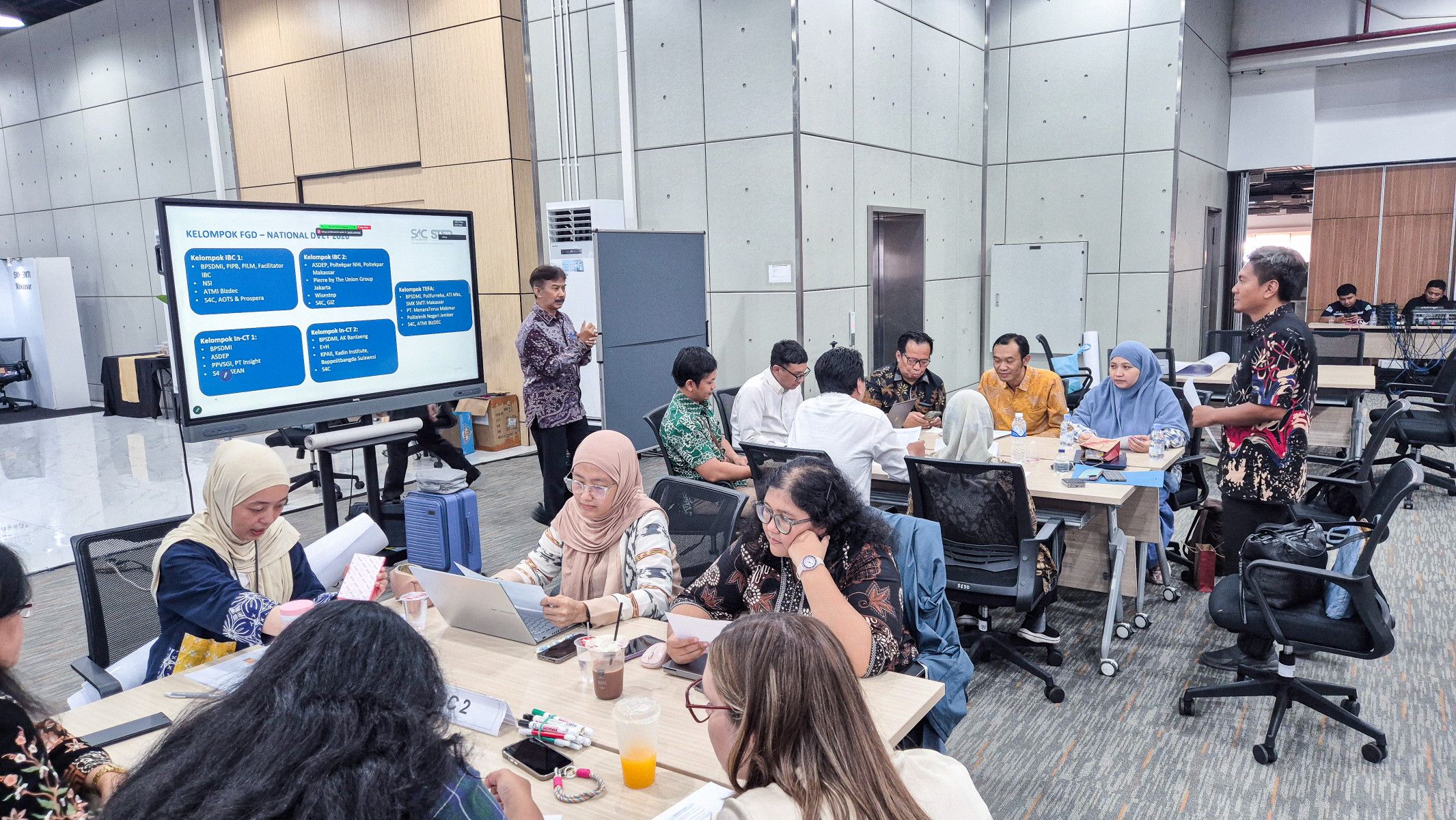
In the days that followed and during various focus group discussions, stakeholders openly examined the challenges. For structured internships and in-company trainers, discussions revolved around how to ensure companies are committed. Participants called for structured, massive, and systemic socialization efforts focused on demonstrating business return on investment. Institutional support and stronger involvement from organizations such as KADIN were also identified as important enablers. Discussions around teaching factories revealed another reality. Participants emphasized an important reminder that teaching factories are learning environments first, instead of profit centers. Bridging these different objectives would need stronger management capabilities and sustained upskilling and reskilling of human resources managing TEFA.
Then came the topic of Industry-Based Curriculum, with one of the most compelling stories coming from Politeknik Industri Furnitur dan Pengolahan Kayu, Kendal. Before implementing IBC in 2018, partner companies frequently voiced concerns regarding interns’ insufficient technical competencies. The situation changed following industry curriculum alignment, in which technical complaints dropped considerably. Employability outcomes improved, and the numbers were telling a story. Around 70 percent of students were already employed while completing their final projects, while approximately 90 percent were absorbed into industry after graduation assessments. This evidence confirms that shared talent design means shared success. Students gain relevance, schools gain credibility, and industries gain skilled talent.
As Swisscontact Indonesia and its partners continue to support the country's vocational transformation, attention is shifting toward sustainability for SS4C. Stakeholders identified several priority actions such as strengthening regulations, expanding and improving the quality of IBC facilitators, allocating dedicated budgets, developing implementation guidelines, and institutionalizing the industry-based curriculum across the education ecosystem. Because the real measure of success is not how well a programme performs while support is available, it is what happens after.