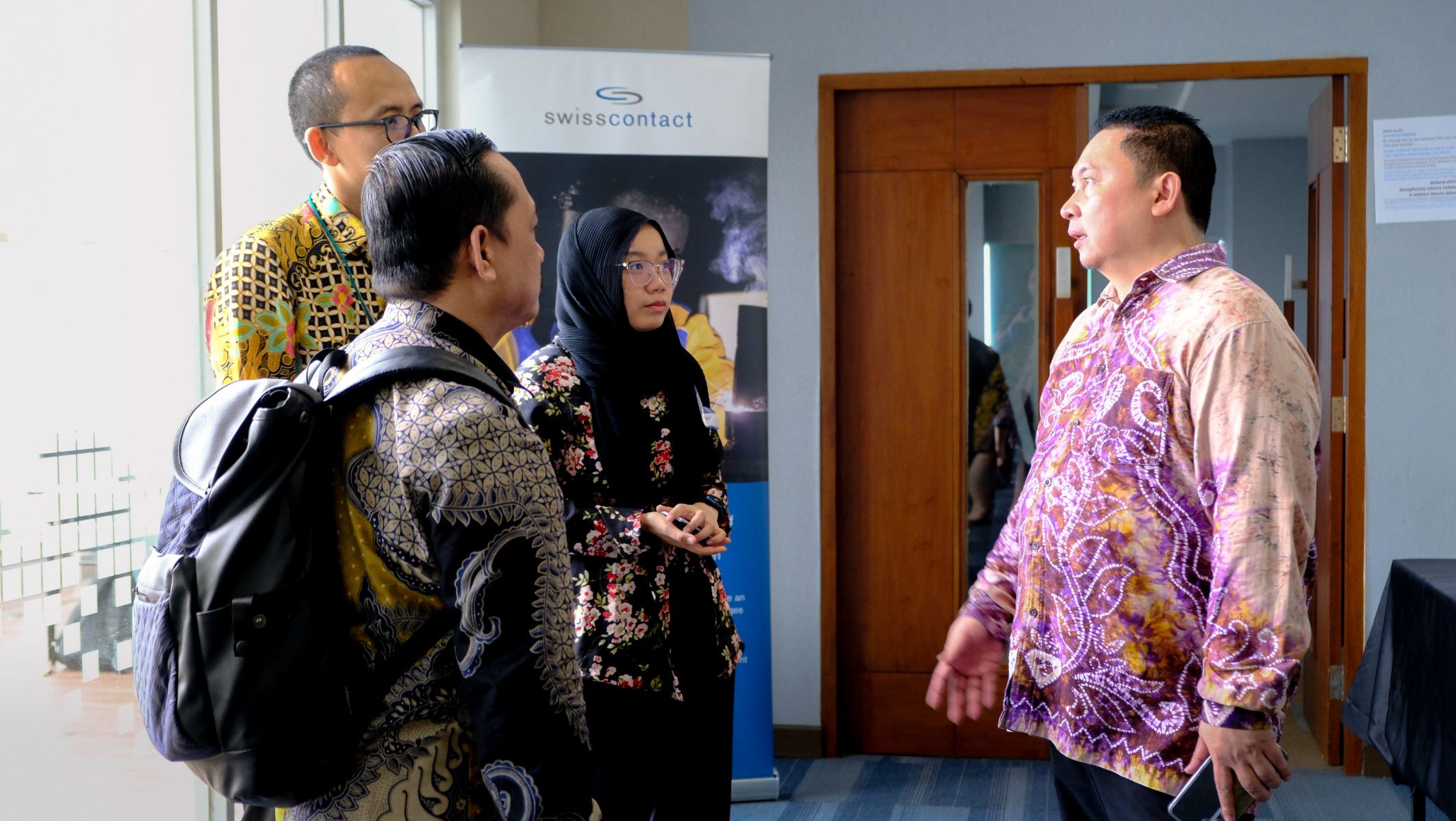
Solutions to this common disconnect were among the main topics addressed during National dVET 2026. Roughly 90 participants from companies, government, vocational institutions, the Swiss State Secretariat for Economic Affairs (SECO), and Swisscontact gathered to discuss what happens when student projects start becoming solutions that industry needs.
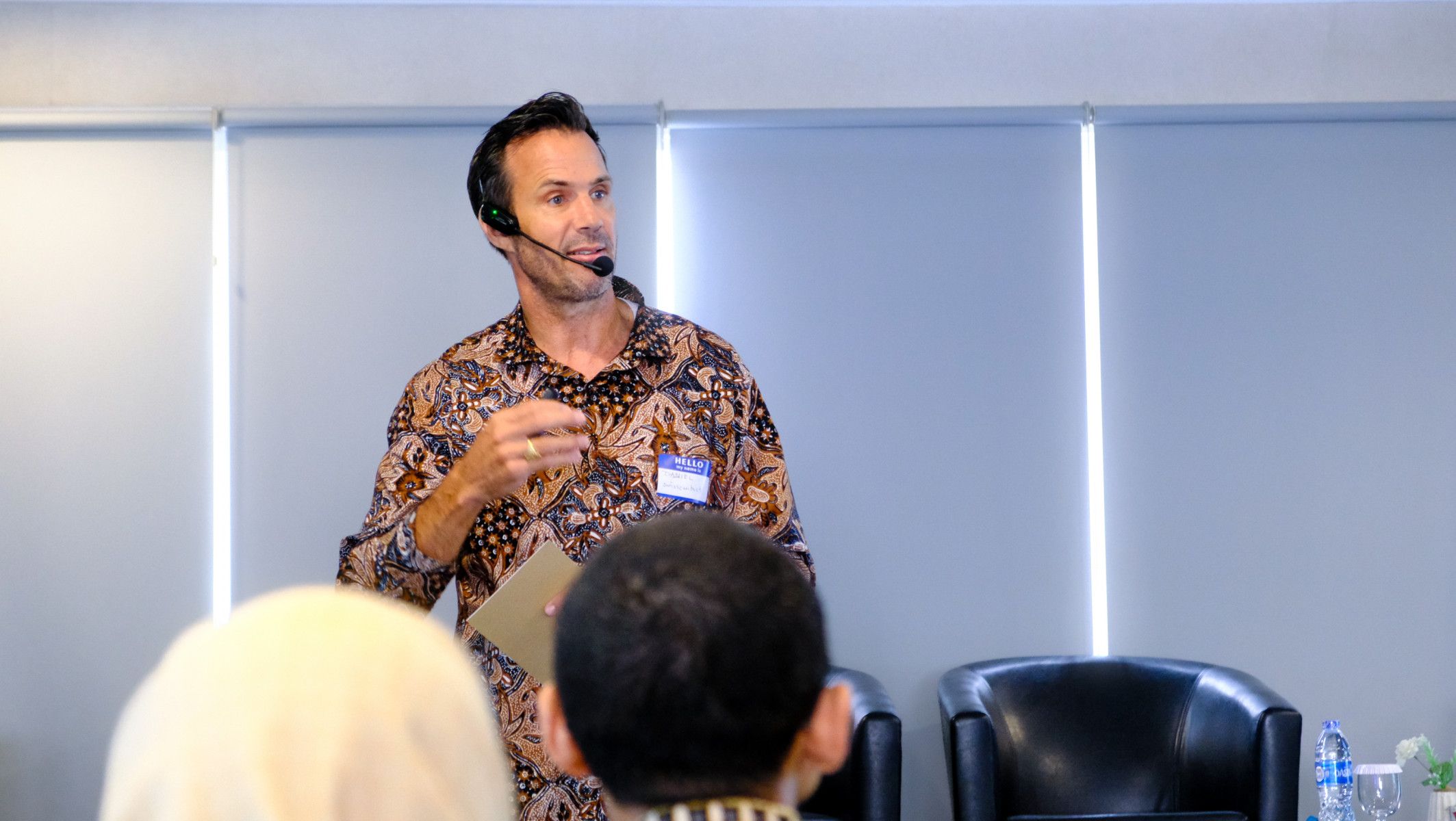
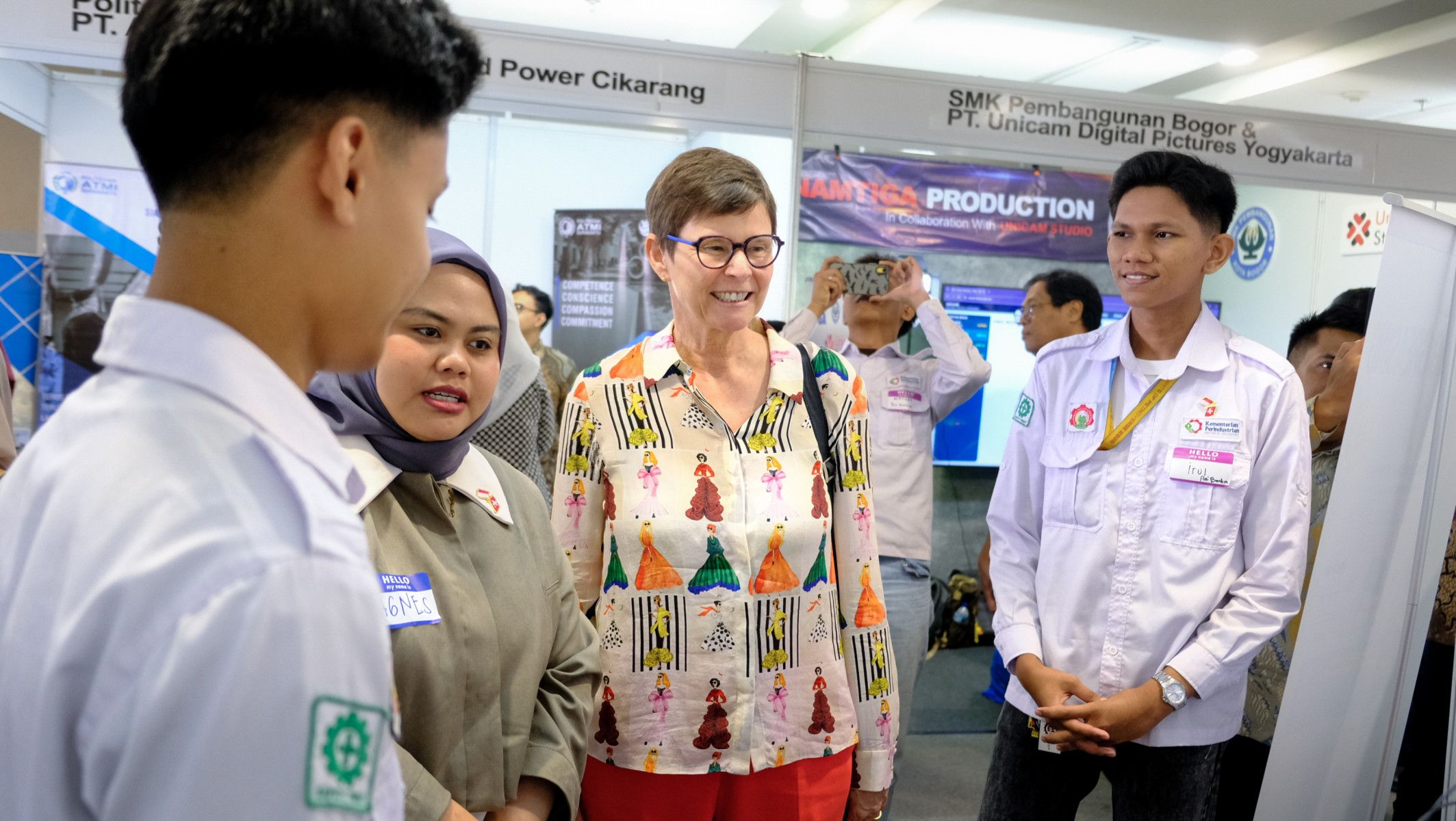
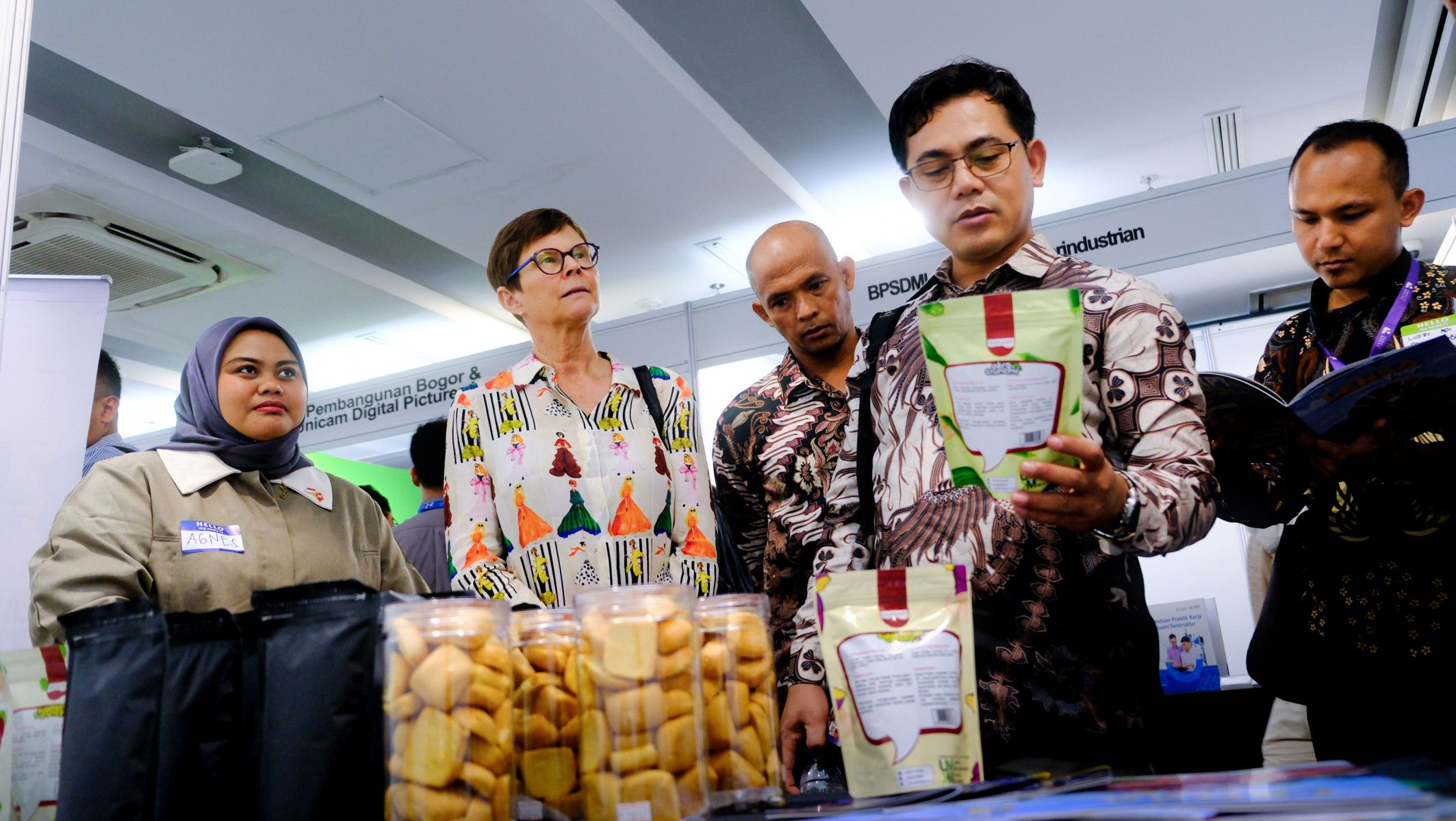
Daniel Weibel, the Program Manager of Swiss Skills for Competitiveness (SS4C) at Swisscontact, pointed to the event's objectives in showcasing how Project-Based Learning (PBL) and Teaching Factory (TEFA) translate industry-relevant curricula into real projects that encourage collaboration between stakeholders, and identify practical pathways for scaling up these partnerships. With a public exhibition right next door displaying real projects from industry-education collaboration, the event was also about building a workforce for companies that move faster than most classrooms.
Politeknik Negeri Batam is one of the vocational institutions that starts with actual industry challenges. Through a digital platform, their partner companies submit problem statements to become a learning project which are then matched with relevant study programs and integrated into the curriculum. From working on a hypothetical assignment, students now develop a solution that someone outside campus genuinely needs.
Muslim Ansori, a lecturer, explained how PBL moves through a structured process using the Conceive, Design, Implement, and Operate framework. Students first investigate the problem and design a solution. They then build it to deliver to the client and receive feedback. The process mirrors what professionals experience every day.
The same philosophy appears in a different form at Politeknik ATMI Surakarta. F.X. Suryadi, a lecturer, recounted that the campus is designed to resemble a company rather than a traditional educational institution. Their TEFA receives production orders from companies to create learning opportunities. Students rotate through production blocks, ensuring continuity even as batches of learners change.
Other revealing insights came from company partners. Marno from PT Sumitomo Wiring Systems Batam Indonesia described how internal managers identified nearly twenty operational challenges before narrowing them down to seven projects to discuss with Politeknik Negeri Batam. One tangible outcome was a wire lifter, a hardware solution designed to mechanically lift and transport heavy wire spools. Years later, it is still being used. He then explained why the company continues investing in these partnerships. It is a talent pipeline that starts long before recruitment.
A similar story emerged from PT Adyawinsa Electrical & Power's partnership with Politeknik ATMI Surakarta. Praditya Ardihantoro, the Director of Operations, described that initial collaboration focused on subcontracting work. Over time, both sides realised students needed participation in the process, and the model evolved. Industry engineers became instructors, curricula were updated, and students entered real production environments. The company now frequently recruits from PBL participants. Though PBL and TEFA are often discussed as vocational educational approaches, they are also workforce strategies. These insights appeared as the strongest themes of National dVET 2026.
By the end of the session, the bigger question during the industry-focused discussion was how to make PBL and TEFA’s legacy endure. One proposal was a national PBL Expo, where polytechnics would showcase student projects and place them under the scrutiny of industry reviewers and judges. Another idea focused on creating a TEFA Hub, a shared meeting point where vocational institutions and companies could exchange and replicate successful models. Participants also called for the reactivation of the Indonesian Polytechnic and Industry Association (APII) to accelerate the spread of good practices.
Industry representatives reminded that every project must still meet the realities of quality, cost, and delivery. Others highlighted an intriguing idea to expand with SMEs. As collaborations grow, participants also stressed the importance of protecting intellectual property and confidential information through clear agreements.
Scaling PBL and TEFA best practices is not a matter of quantity or copying what works, but about building the bridges that allow good projects to travel further. One company already moving in such a direction is PT Unicam Digital Pictures, a digital videography company partnering with Pembangunan Bogor Vocational School (SMK). They have begun opening branches in regions where school partnerships exist. This demonstrates how vocational collaboration can expand beyond classrooms and create new economic opportunities on the ground.
As National dVET 2026 drew to an end, the message pointed to the future of vocational education that depends on bringing students closer to industries. A strong collaboration between education and industry enables graduates to enter the workforce carrying the proof that helps solve industry challenges.
Swiss Skills for Competitiveness (SS4C) initiative is a merger of the Skills for Competitiveness (S4C) and Sustainable Tourism Education Development (STED) projects, funded by the Swiss State Secretariat for Economic Affairs (SECO) and implemented by Swisscontact in Indonesia.